Search This Blog

29 November 2009

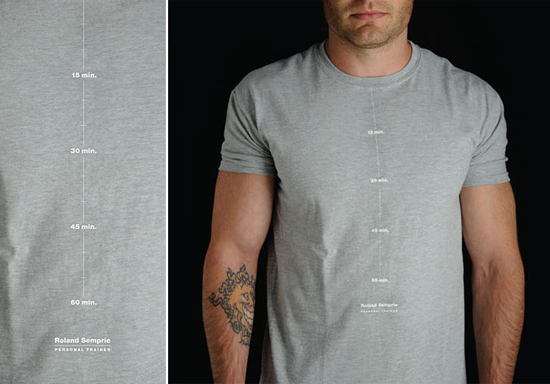
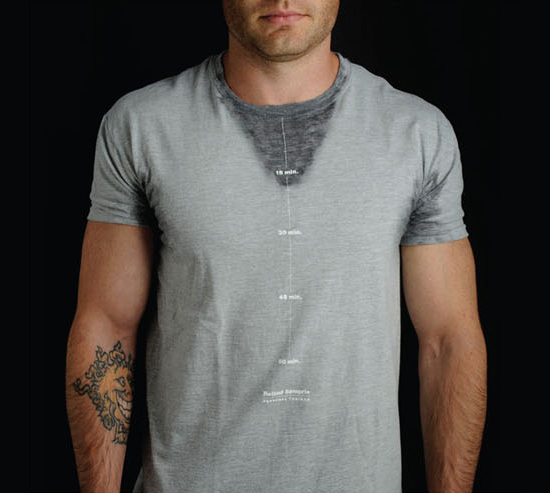
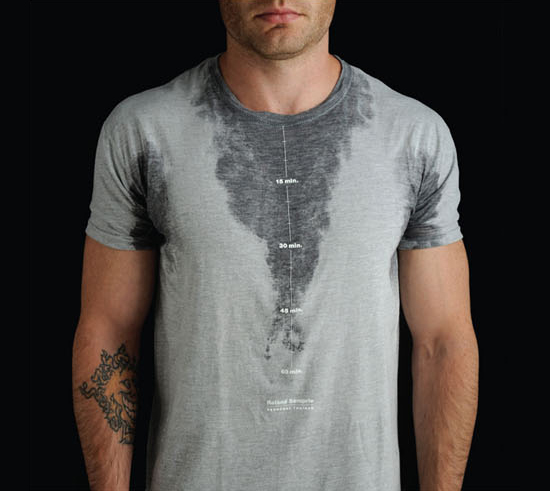
sweat measuring t-shirt


GLP advertising + design toronto designed this sweat measuring t-shirt for promoting a local personal
trainer. the shirt is a standard grey t-shirt with a simple line down the center with measured increments
of time. as the wearer works out at the gym, their sweat soaks into the shirt, changing the colour of the
material. the design was created as a promotional tool for a personal trainer named roland semprie.


via i believe in advertising

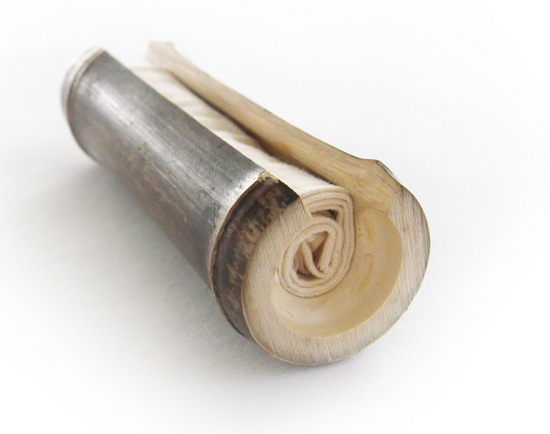
boo bag

boo bag' by sung-un chang from usa


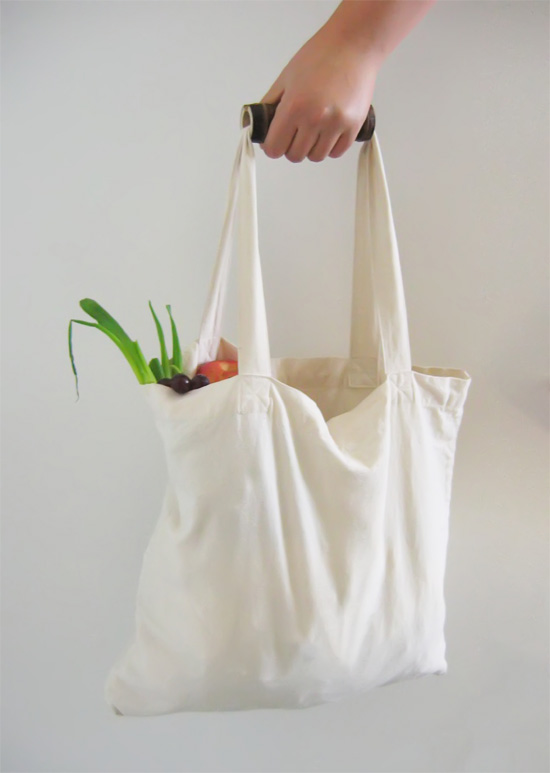
boo bag is a reusable grocery bag which is made of highly sustainable bamboo fabric.
when grocery shopping, the bamboo casing works as a handle and provides comfortable
grip for the user's hand.


'boo bag' in use

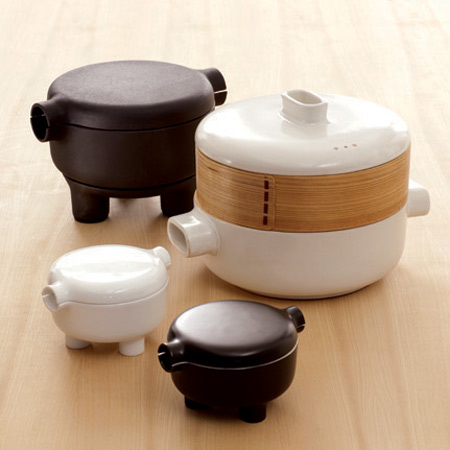
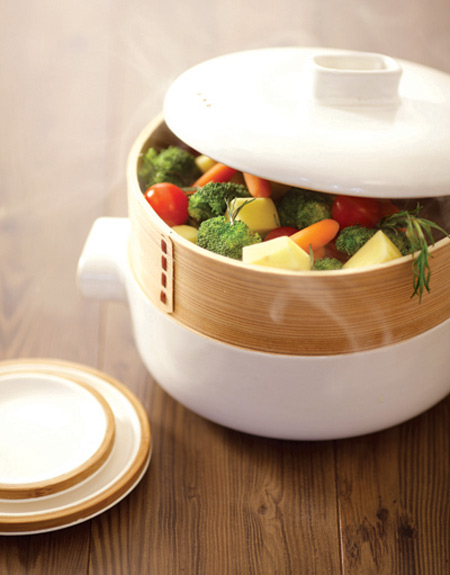
Ding Steamer Set by Office for Product Design

Hong Kong designers Office for Product Design have designed a food steamer for homeware brand JIA.

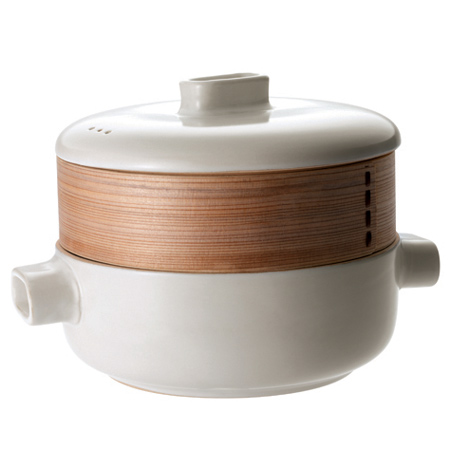
Called Ding, the set consists of a ceramic cooking pot with a steaming basket made of cedar wood and terracotta.

Here’s some more information from Office for Product Design:

‘Ding’ Steamer Set for Jia

The Hong Kong based Office for Product Design have designed the latest addition to their ‘Ding’ Series for JIA, a steamer set which was recently launched at Maison et Objet in Paris.

About the Project

Steaming food is one of the healthiest ways of cooking and is becoming increasingly popular around the world. It is also a common method of cooking in Chinese cuisine. Building on this the Office for Product Design has reinterpreted the classic Chinese steamer and pot for Chinese focused homeware brand JIA giving it a modern twist.

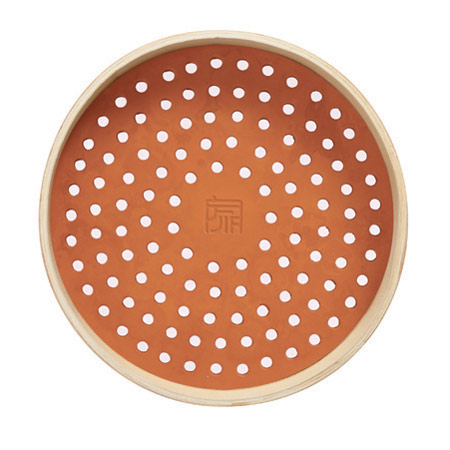
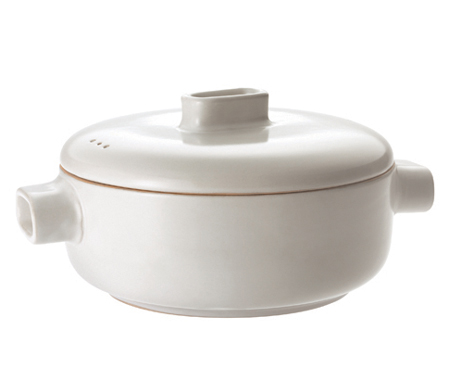
The ‘Ding Steamer’ set consists of a cooking pot with an accompanying cedar wood steamer basket. This steamer set differs from most in that it has a terracotta base, a material ideally suited to steam cooking as it absorbs and retains excess moisture, thus stopping the food from becoming soggy. The pot itself is made from glazed fireproof ceramic which is highly resilient and can be placed directly on top of a heat source or used separately for oven cooking.

The steamer set complement the other pieces in the series, the cast iron ‘Ding Casserole’ and accompanying bone china ‘Ding Bowls’.

About the Designers

The Office for Product Design work on projects across a wide range of typologies, spanning furniture, lighting, home ware and electronic products. The Hong Kong based design studio was set up in 2007 by Nicol Boyd and Tomas Rosén who originally met while studying at the Royal College of Art in London.

Nicol Boyd was born in Glasgow, Scotland and studied at Glasgow School of Art and the Royal College of Art in London. After working for Alessi (Italy), IDEO (USA) and Nokia (UK) amongst others he established himself as a freelance designer working with worldwide clients. He later went on to set up the Office for Product Design.

Tomas Rosén from Stockholm originally studied philosophy and mechanical engineering before completing his industrial design studies at the Royal College of Art. He has worked in the automotive interior design field in his native Sweden and also as a freelance product designer in London. Before founding the Office for Product Design he was a senior designer at Nokia’s design studio in London.

28 November 2009

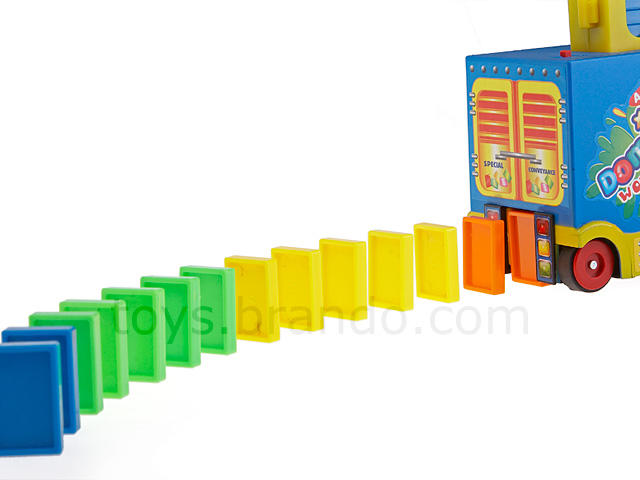
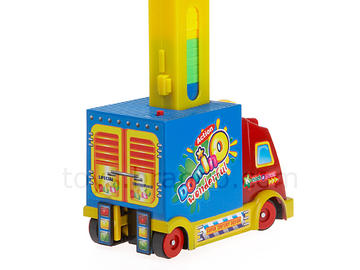
Toy truck craps out domino runs


Brando's Auto Domino Building Truck is a battery-powered toy truck that shits bricks -- that is, it poops out dominos standing on end at the correct intervals to make a domino run. Or so the manufacturer says -- I haven't tried it yet. But I have a vision of setting this thing down at one end of an airport concourse and creating a mile-long run. I love that the dominos load in via a magazine that sticks out of the top like a banana-clip on an automatic rifle. The Auto Domino Building Truck (via Red Ferret)

Entre Lineas by MN*LS

photo © Alberto Minio Paluello


MN*LS was born in 2008 when Colombia met Austria, when Margarita Navarro met Ludwig Slezak. Margarita Navarro was born in Colombia, studied design in Madrid and after some work experience in Spain and the United States, she moved to Milan for her postgraduate studies on Design at Domus Academy. On the other hand, Ludwig Slezak was born in Austria, studied in Los Angeles, London and graduated from St. Martins College of Art and Design. After several years of various collaborations within design and architectural studios, they both ended up in Treviso. There, in 2008 they founded their studio MN*LS, where they are mainly working in the fields of sports apparel, interior, product design and graphics.

photo © Alberto Minio Paluello

What is evident throughout all their areas of interest is the combination of craftsmanship and industrial processes, as well as of tradition and innovation.

photo © Alberto Minio Paluello

Entre Lineas is one of their design projects. It is a one-off collection where unknown pieces are inspired by the traditions of ready-made. Keeping in mind the definition by the king of readymades Marcel Duchamp that a ready-made is "an ordinary object elevated to the dignity of a work of art by the mere choice of an artist", one can understand that the field of ready-made design objects is definitely a challenging one for designers.

photo © Alberto Minio Paluello

photo © Alberto Minio Paluello

Through the Entre Lineas collection, MN*LS studio manages to add a different value to given objects and reinterpret them by the application of handmade techniques. Specifically, the collection is comprised of illuminated objects in a limited edition that appeal due to their rather poetic approach. Small hand folded antique books are turned into romantic & stylish lightings. If until now we were accustomed in using a light to read between a book's lines, now the light itself comes from between lines, in spanish "entre lineas".

photo © Alberto Minio Paluello

Overall, the Entre Lineas project has been exhibited in a small gallery, a showroom and a Japanese restaurant as decoration. Currently, MN*LS have another Entre Lineas exhibition planned in Austria, focusing this time more on illuminated sculptures.

photo © Alberto Minio Paluello

T-bag


Are you thinking to reuse a plastic bag? Have you ever tried this? This is actually an order from Santa Casa da Misericórdia de São Tomé e Príncipe for promoting products from Ossobô EcoSocial.
link

Keil stool by Daniel Heer

photo © Achim Hatzius // Image Courtesy of Daniel Heer

Keil stool by Daniel Heer

The redefinition of an existing object is not always an easy task. Above all it requires imagination, creativity and a good knowledge of the techniques to be applied. Especially when we are talking about simple things like a stool; in other words a chair without a backrest. Every now and then new innovating stool designs come up in an attempt to make the difference. Daniel Heer's vision is to create a modern piece of furniture by matching two different materials in a simple way, a combination of wood and textile.

photo © Achim Hatzius // Image Courtesy of Daniel Heer

photo © Achim Hatzius // Image Courtesy of Daniel Heer

Keil is a cubic form stool that can be used in different ways changing its position or height. Trying not to hurt the material, Daniel doesn't use any pins allowing this way the wood to interfere with the textile, a combination that turns the whole project into beautiful seating furniture. High quality materials are used, native wood (oak, walnut, pear) for the frame and fabric straps, premium grade leather or transparent nylon webbing for the seating part. Both elements are mixed in such a way that allows the structure to show off as an essential part of the concept. The simplicity of Heer's project also ensures the minimum use of resources.

photo © Achim Hatzius // Image Courtesy of Daniel Heer

Based in Kreuzberg neighborhood of Berlin, Daniel Heer is an expert of the handcraft tradition, a legacy of his family's over the past three generations. His vision is to use and transform the classical norms into a modern functional aesthetics. Keil as an object itself represents a reinterpretation of the classical techniques into a new form. This is more about a deconstruction of old traditional norms; by reconstructing them afresh, the designer is driven to a totally new concept free of conservative formulas. The benefit of such a procedure is that even the simplest, classical objects can be redefined in terms of design without modifying the original concept values.

photo © Achim Hatzius // Image Courtesy of Daniel Heer

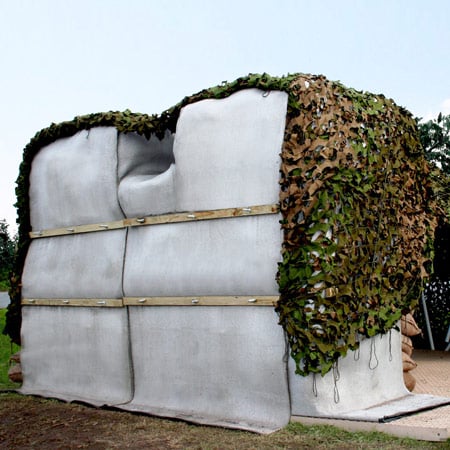
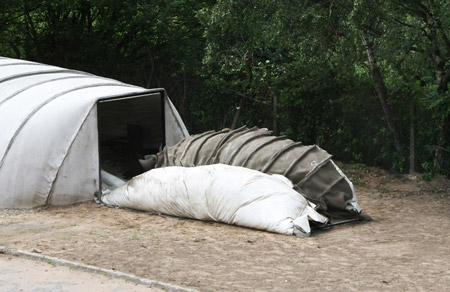
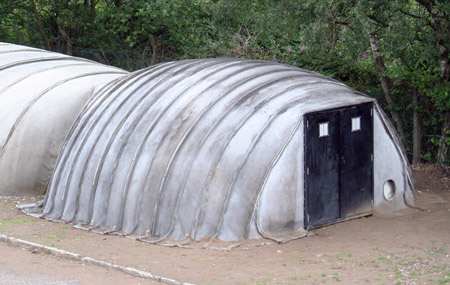
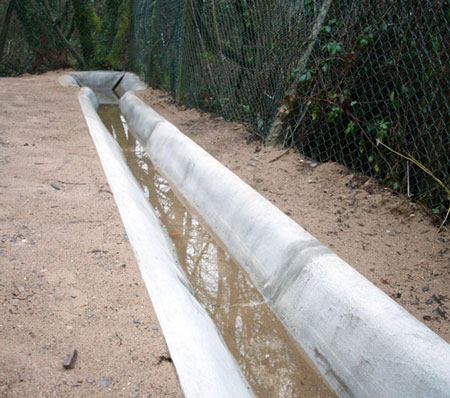
Concrete Cloth by Concrete Canvas

UK company Concrete Canvas have been awarded Material of the Year 2009 by materials consultancy Material ConneXion for their cement-impregnated fabric.

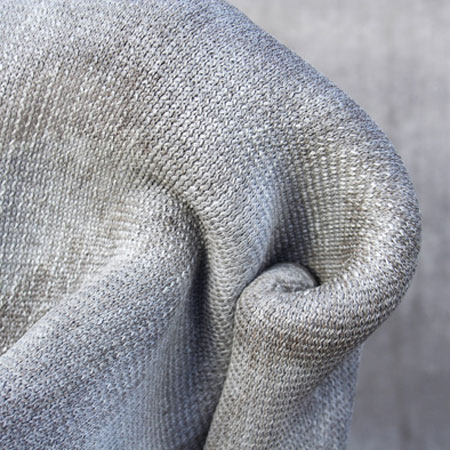
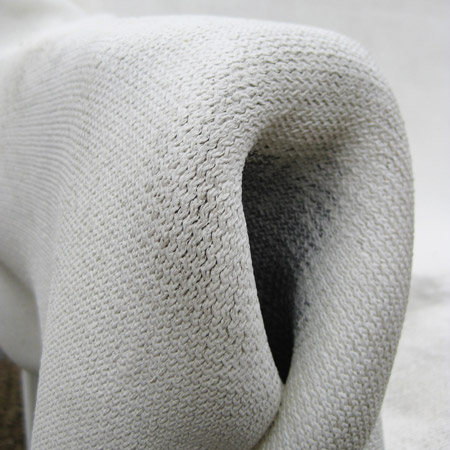
Called Concrete Cloth, the material consists of cement layered between fabric that can bond with water, backed with PVC.

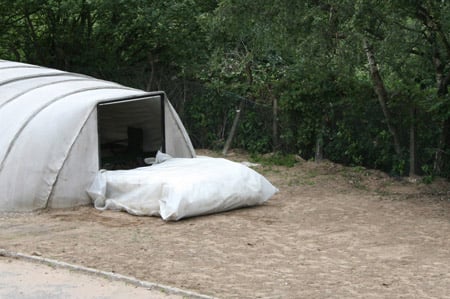
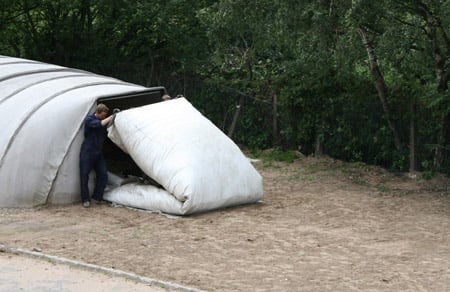
The product can be formed into the required shape then allowed to absorb water, causing it to set after two hours.

The material can be used structurally and is fireproof and waterproof. The designers hope it will have applications in disaster relief, military and commercial environments.

Here’s some text from Material ConneXion:

New York, NY, November 23, 2009 – Global materials consultancy Material ConneXion announced today the launch of its first annual MEDIUM Award for Material of the Year, naming UK-based company Concrete Canvas’s Concrete Cloth as the inaugural winner.

The award recognizes materials juried into the company’s Materials Library within the past year that demonstrate outstanding technological innovation and the potential to make a significant contribution to the advancement of design, industry, society and economy.

“The MEDIUM Award for Material of the Year is an opportunity to celebrate the extraordinary breadth and scope of materials innovation today,” says George M. Beylerian, Founder & CEO of Material ConneXion. “The winner is distinguished not only for its technical ability, but for its capacity to make a lasting impact on our lives.”

Concrete Cloth’s groundbreaking cement impregnated flexible fabric technology, which allows it to be quickly and easily molded and set into shapes, is a natural choice for 2009’s winner. “With the simple addition of water, Concrete Cloth makes it possible to create safe, durable, non-combustible structures for a wide range of commercial, military and humanitarian uses,” says Dr. Andrew H. Dent, Vice President, Library & Materials Research at Material ConneXion. “This innovation is especially remarkable for enabling the construction of rapidly deployable shelter and food storage structures in disaster relief situations,” Dent adds.

Erased Classic

Erased Classic is a collection of carpets by Jan Kath. They are based on classic patterns from Italian wall coverings and Indian saris. The carpets are produced by weavers at manufacturing sites in Kathmandu. But their final look is caused by acid, which makes the patterns fade and disappear. The customer cannot only define the color, materials, size, knot density, and design, but also the degree of erosion.

Erased Classic by Jan Kath

Erased Classic by Jan Kath

Erased Classic by Jan Kath

found at stylepark

Flat Project

The Flat Project is a collaboration between Jo Nagasaka and Shuhei Nakamura. They used translucent color epoxy on uneven surfaces to create these Flat Tables. The color of the surfaces are dependent on the depth of the epoxy layer. The flattening creates a diversity in color. You can go and see these table at happa inTokyo till December 19th.

Flat Project

Flat Project

Flat Project

Flat Project

Flat Project

Flat Project

michiel cornelissen: a bit cross


'a bit cross' by michiel cornelissen

dutch designer michiel cornelissen has sent us in images of his project 'a bit cross'.

the combination of cross pendant and multitool is made of laser sintered steel. the bit
sizes are based on actual tool bits, including a phillips head and flat blade, which can
be used for light jobs.


25 November 2009

Pop Up Office

I went to Victoria Market in Melbourne last month and amazed by a bunch of extreme pop-up greeting cards. One that really stunning, an Anfield Stadium popped from the card in such details. Hey! I should post the pictures here next time...

Just now, while I was browsing some other designers' works... I found AN OFFICE popped from a huge card designed by Liddy Scheffknecht & Armin B. Wagner!!! Guess that video might explain better than i do... check it out!


Pop Up from abw on Vimeo.

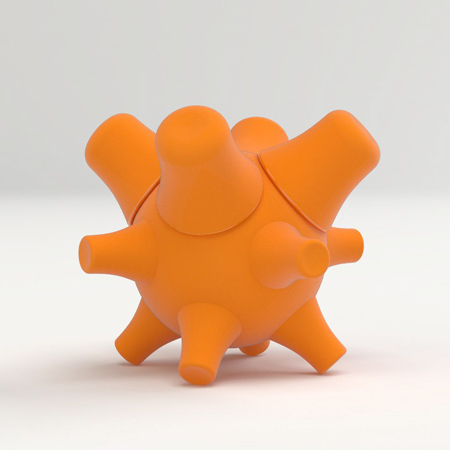
Sake Bomb by Alexander Purcell

Los Angeles designer Alexander Purcell has created a container for serving Japanese sake, inspired by blowfish and sea mines.

Called Sake Bomb, the object comprises a ceramic vessel covered in spikes, which stabilise it on the table and accommodate four cups resting on top.

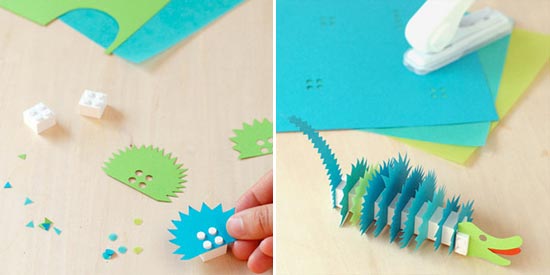
muji + lego toy collaboration


the japanese retailer muji has teamed up with the legendary toy maker lego to create a new series of toys
which combine lego’s plastic blocks with paper. the collaboration resulted in four play sets that feature
a collection of lego bricks, paper and hole punching tools that allow the user to combine them together.
the tools enable users to create animals, characters and a number of other shapes that come with the sets,
but they can also be customized with a little imagination and some paper.

http://www.muji.net


Popular Posts