Search This Blog

Showing posts with label interior design. Show all posts

25 May 2012

Camper + Shigeru Ban – House of Shoes


Our friend Halley Tsai checked out Camper’s New “House of Shoes”, designed by Shigeru Ban, which opened in NYC on Tuesday evening in Soho. Shigeru Ban’s signature paper tubes make an appearance in the design, in the form of a gable roof. The tubes are a temporary art installation, but they contribute to the concept of a “House of Shoes”
Using the Camper red and white colors, a design was created which has the floor to shelving at the back wall of the store. The angled fin walls of the shelving units each have a piece of the Camper logo. When viewed from Prince Street on angle the logo is read as a complete word. From the Greene Street view, the letters are broken.
The dimensions of the shelving unit correspond to red stripes on the concrete flooring and to the corrugated red and white ceiling. Furniture in the store is designed by Shigeru and fabricated by Artek.
The original exterior windows and walls between the structural piers were demolished. In place are sliding floor to ceiling glass doors which open the entire facade on Green and Prince Streets in the warmer weather, so that it feels like an open market on its site on the corner.
All photos were taken by Halley Tsai, except where noted otherwise. Thanks, Halley!

Sketch: Shigeru Ban

Photo Credit: Billy Farrell Agency
I love the angled fin walls that display the Camper logo when viewed at the right perspective, but which are broken up and abstract when viewed from other angles.


The seating area is made up of elements from Shigeru Ban’s 10-Unit-System.


Shigeru Ban and Miguel Fluxá, Camper’s general manager, discussing the collaboration. Shigeru Ban felt that the original building looked lonely, so he added the paper tube gable roof to visually suggest a home

9 May 2012

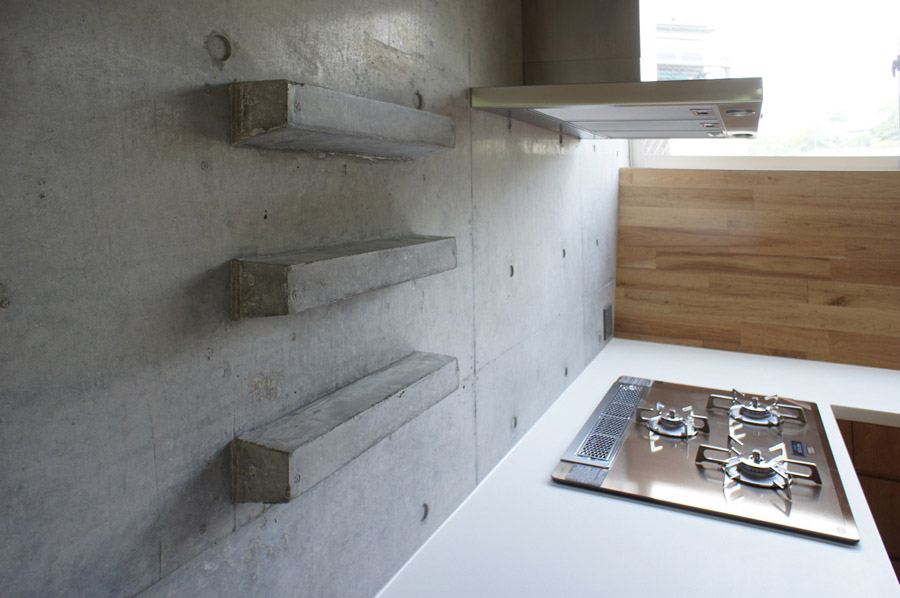
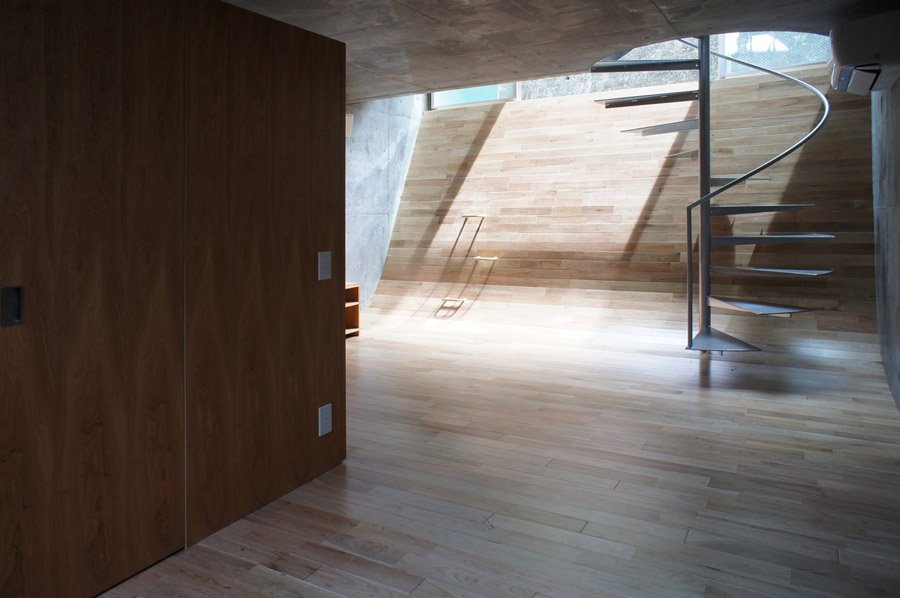
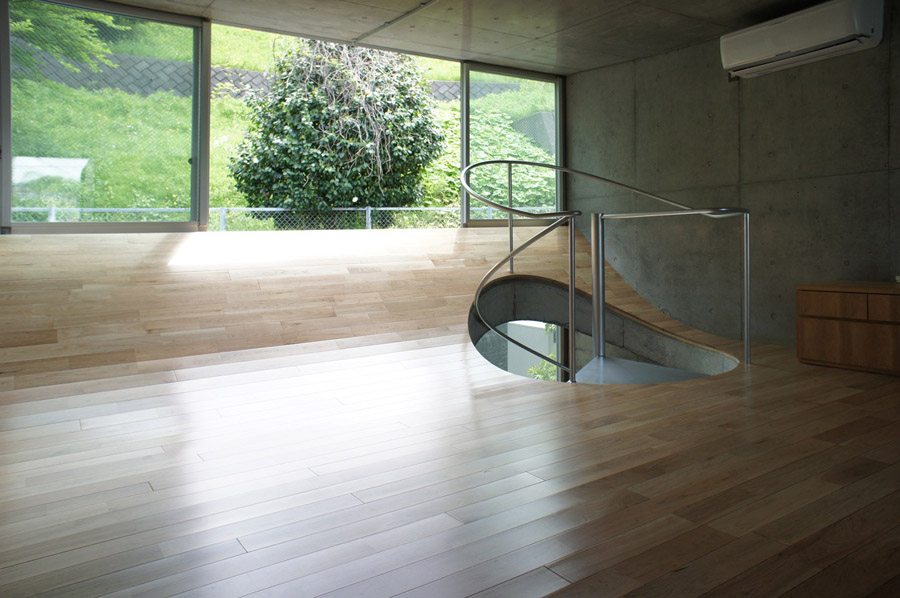
House in Zushi by Takeshi Hosoka


images are all courtesy japan-architects, who visited the open house in early May.
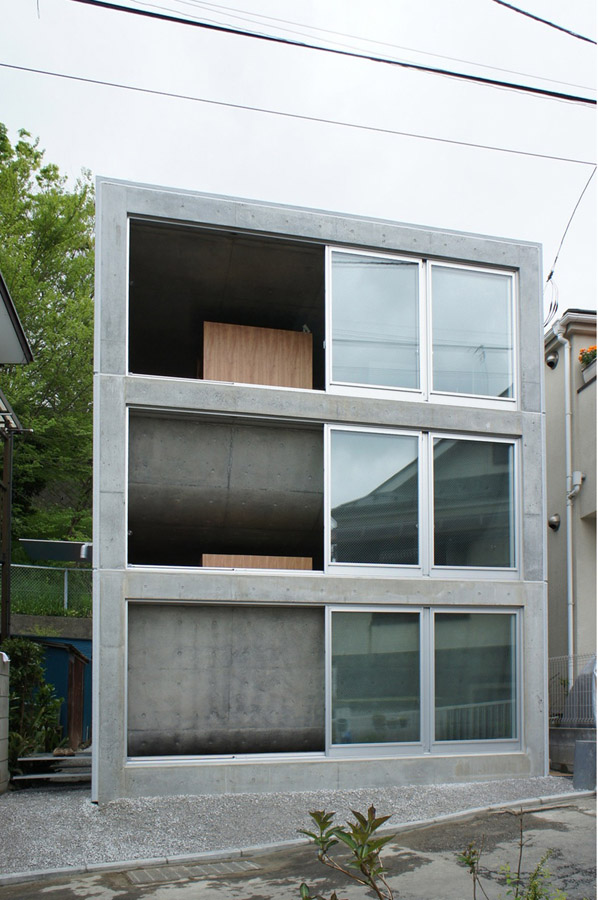
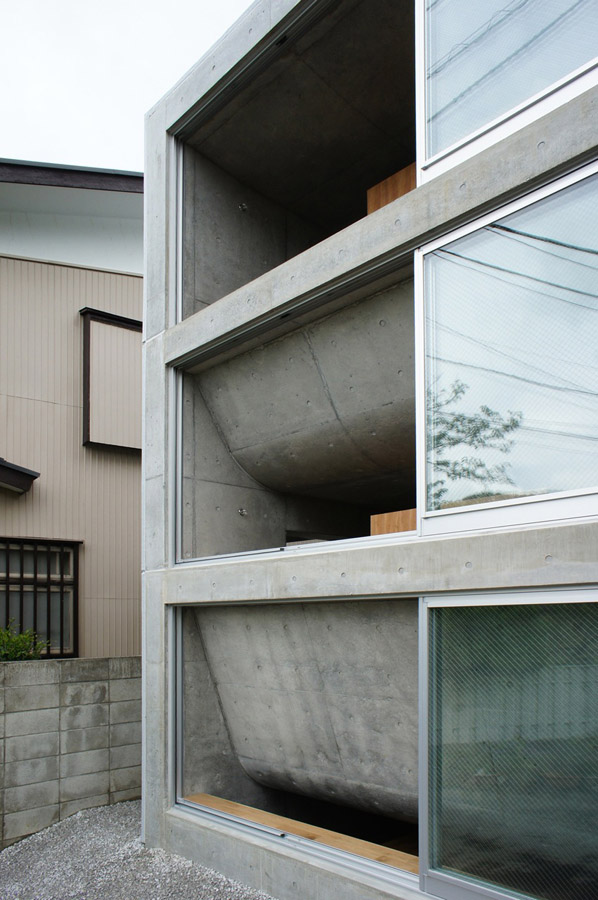
Japanese architect Takeshi Hosoka is master of the unconventional. Whether he’s designingigloo-looking noodle shops or amazing homes that flip the indoors for the outdoors, Hosoka is continually pushing architectural boundaries with his shape-shifting projects. House in Zushi is his latest home – completed just last month – and uses recessed flooring as a unique method for ensuring privacy.
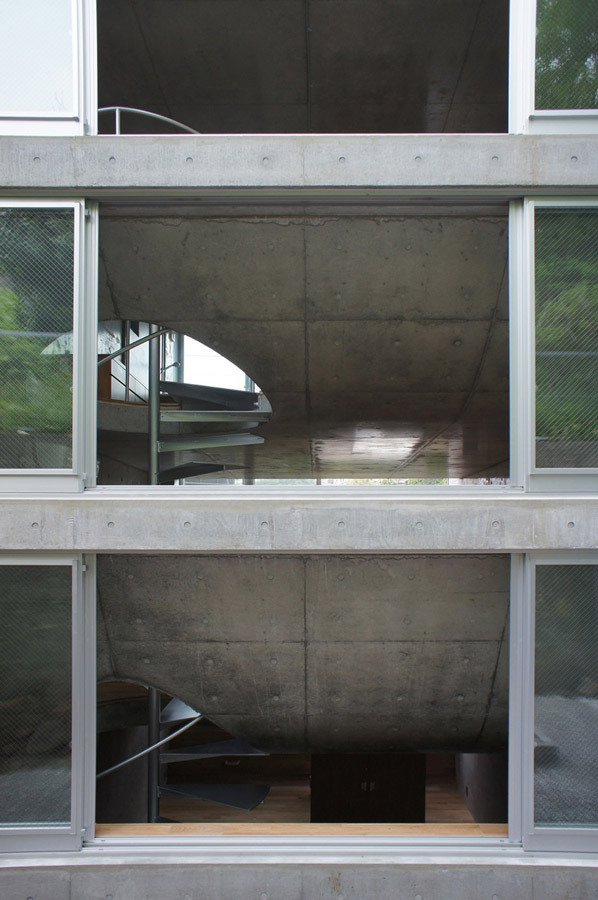
Those slabs of concrete that you see in the windows are actually the ceilings of each story or, if you prefer, the floor of the above story. Confusing? Have a look at the architectural model.
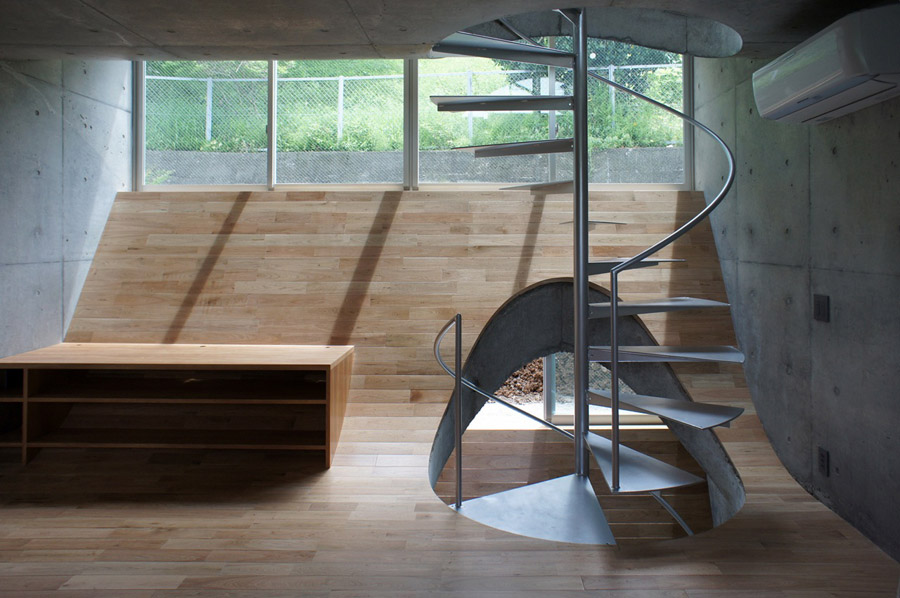
The curved floors allow for sunlight to enter each room, while also creating a significant barrier between residents and neighbors. Although I have a feeling the interesting house will only attract more eyes.
I’m not convinced that this is the most efficient way to maximize space, but it certainly creates in interesting interior, which will, in turn, undoubtedly create interesting sitting positions.

7 May 2012

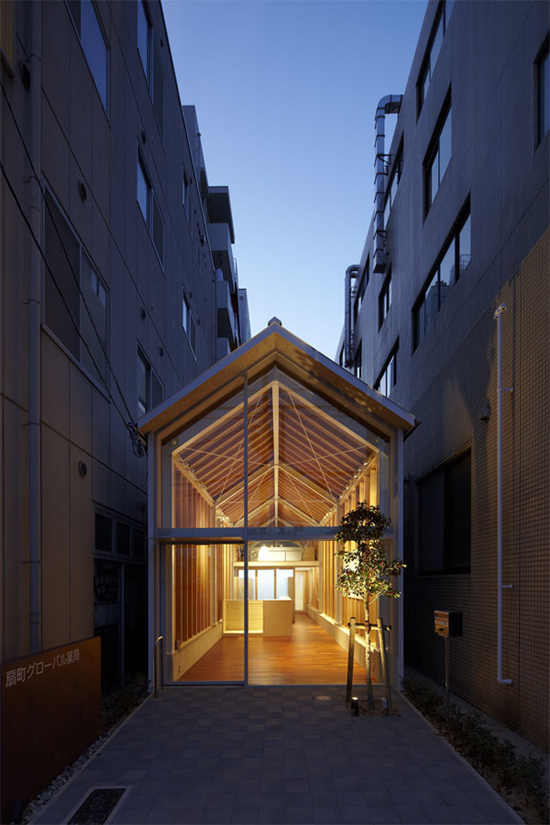
Ougi-machi Global Pharmacy by Ninkipen


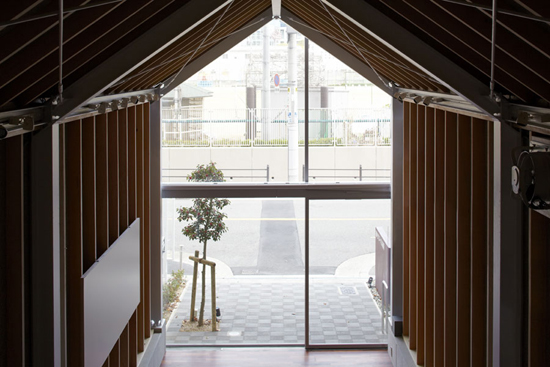
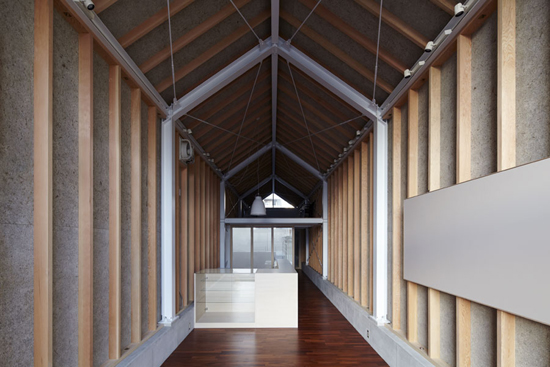
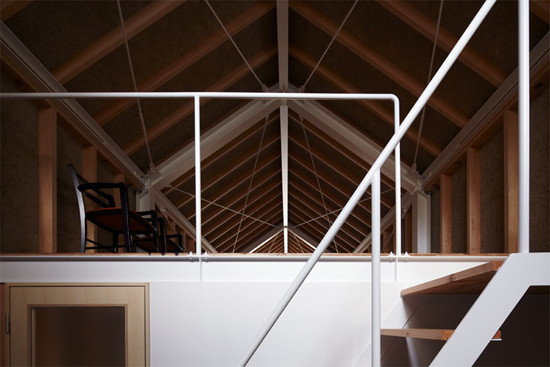
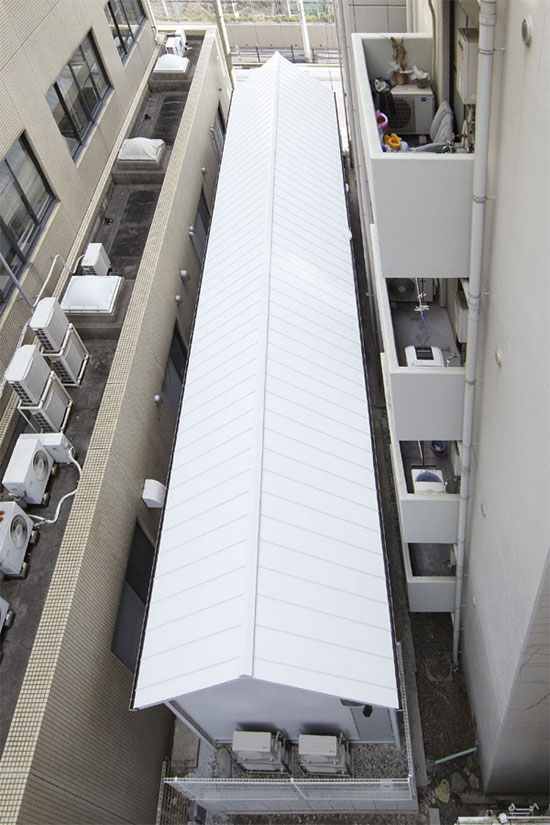
What an amazing pharmacy designed by Osaka-based architecture studio Ninkipen. Completed in November of last year, the store represents the latest addition to the Kansai-based Global Pharmacy chain. What’s enthralling (and what I would like to know more about) is that, according to the architects, the store was built on an old road that had been illegally occupied since the end of WWII, hence it’s narrow width – just 4 meters. The architects attempted to preserve history within their designs by creating an elongated store that mimics the look of a road.
Osaka is well-known – notorious, if you will – for their illegally occupied spaces. They were often utilized by black markets and other dark forces who continued to elude the reach of government and authority, even into modern times. I wonder what this space was previously used as?

Looking out from the store you can still see where the road is rounded off – the remnants of an intersection


source: Ninkipen

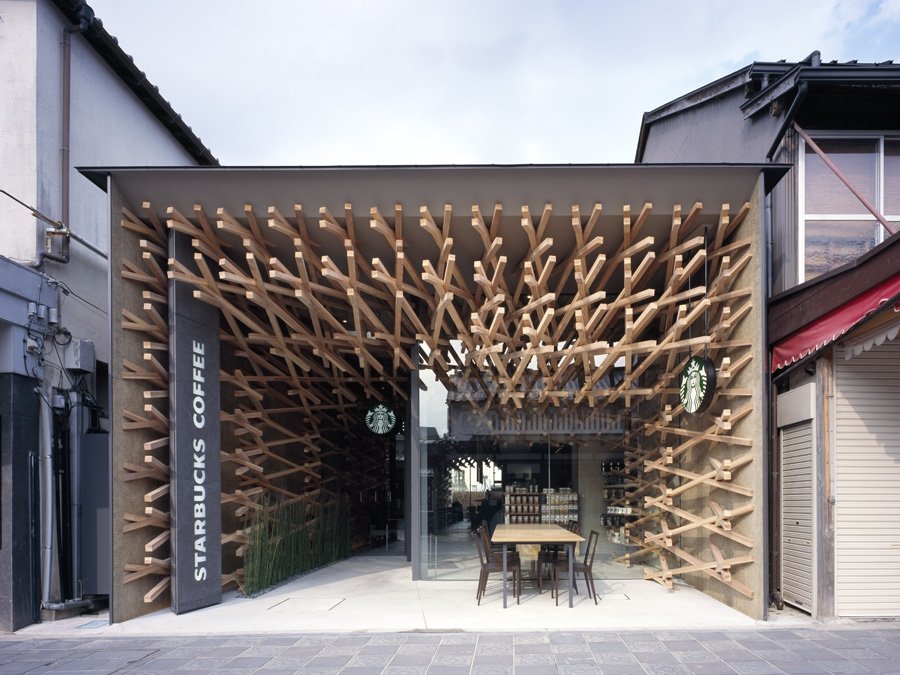
Starbucks in Fukuoka by Kengo Kuma

 
images courtesy Kengo Kuma | click to enlarge
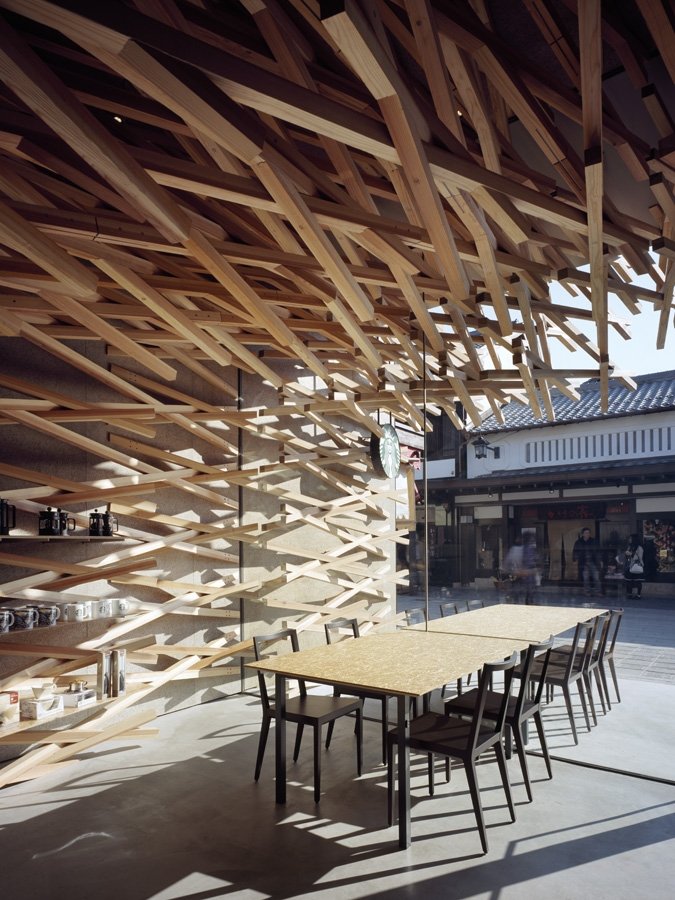
Depending on where you are on the spectrum of coffee politics, you may consider Starbucks a neighborhood boon or blight – a convenient place to get your caffeine fix on every corner, or a symbol of capitalistic mass-production that now has a stronghold on your cup of joe. Either way, you have to admit that this new Starbucks interior in Fukuoka is pretty awe-inspiring.
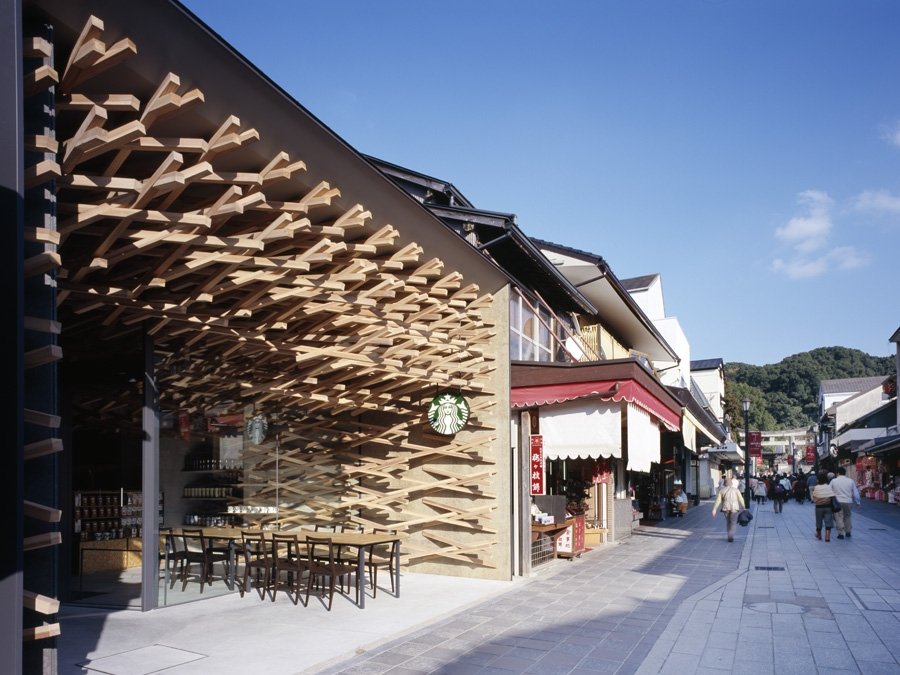
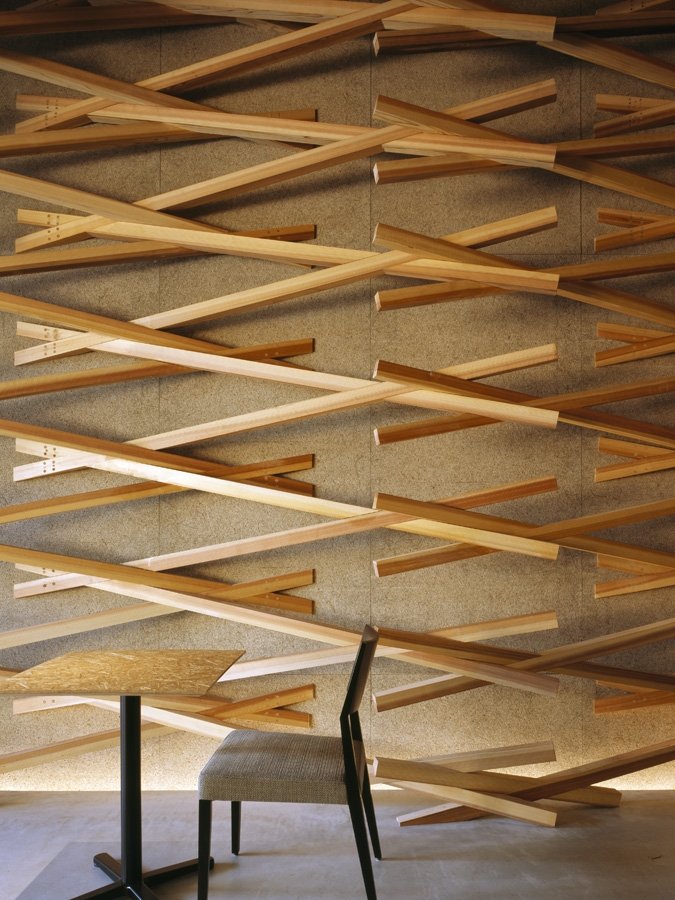
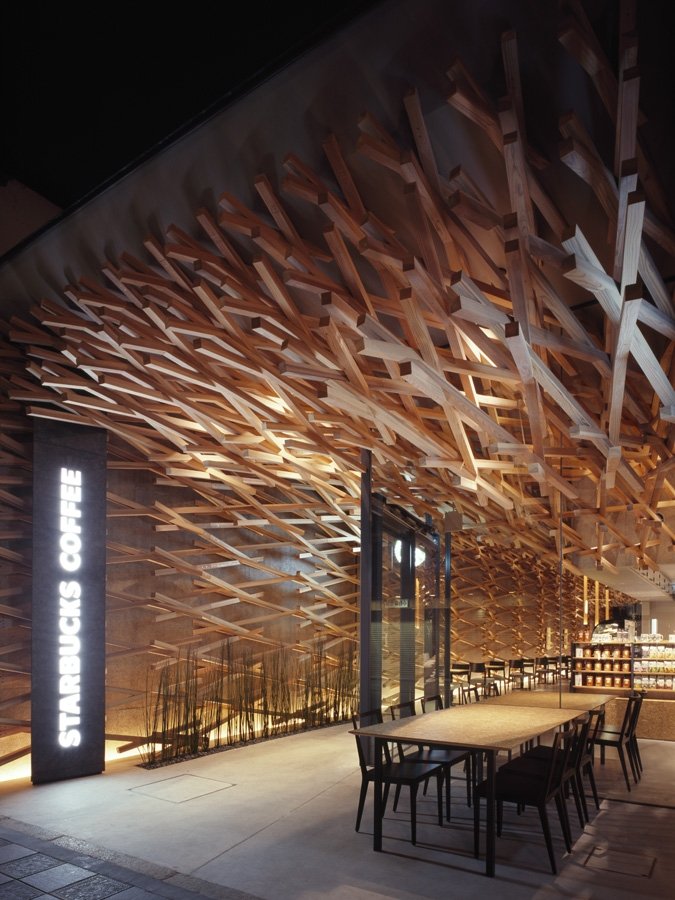
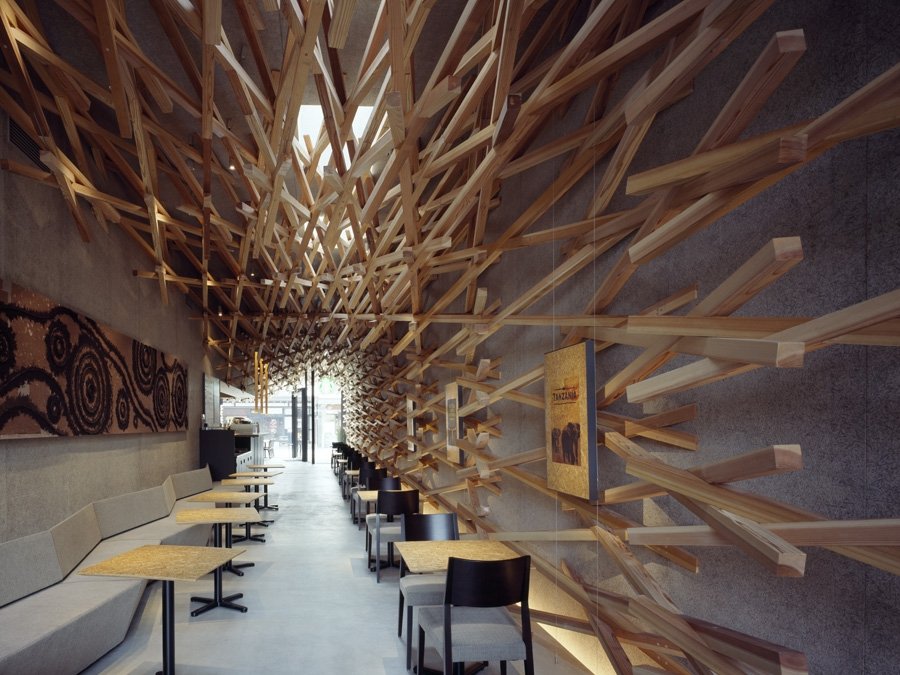
Late last year we reported that architect Kengo Kuma was working on a starbucks in Fukuoka. Well now we finally have images of the completed store. The new location, which opened in late December, is located near Daizaifu Tenmangu, a Shinto shrine first constructed in the year 905. Given the deep history and cultural significance of the site, Kuma opted to go with the traditional technique of interlocking wooden blocks, a stylistic genre he has been experimenting with quite a bit.
The wooden beams partially extend out onto the street, resembling branches in a forest. The pure, natural materials are consistent with the Shinto aesthetic and are a gorgeous fusion of contemporary and traditional.


source: contemporist | Ryutsu

2 December 2011

Boffo Building Fashion: Irene Neuwirth and Marc Fornes/THEVERYMANY


I love what BOFFO is doing with their collaborations between fashion designers and architects. Their latest installation is a temporary shop for jewelry designer Irene Neuwirth, designed by Marc Fornes/THEVERYMANY. The result is an amazing environment and landscape of jewelry terrariums that showcases Irene’s raw jewelry line beautifully. Check out the shop while you can – it’s open until October 12th at 57 Walker Street in New York.


7 November 2011

sou fujimoto: house NA


'house NA' by sou fujimoto architects, tokyo, japan
image courtesy of sou fujimoto architects


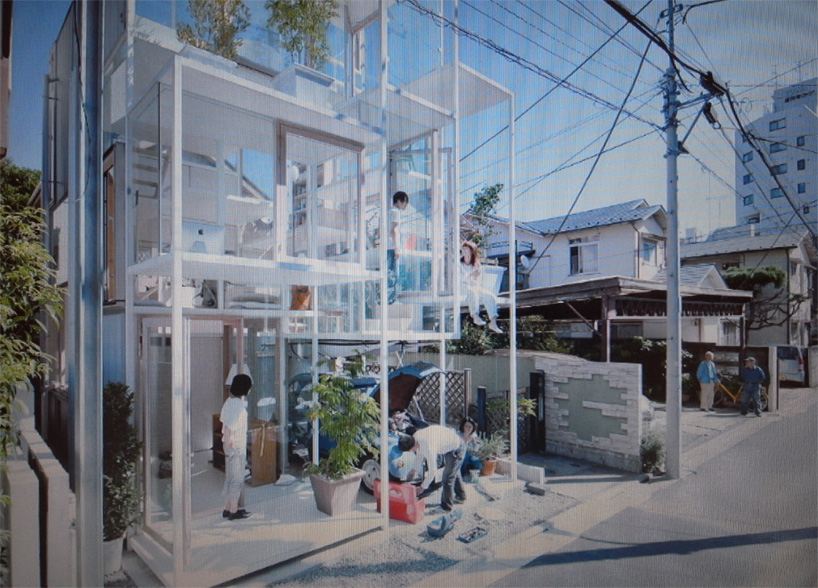
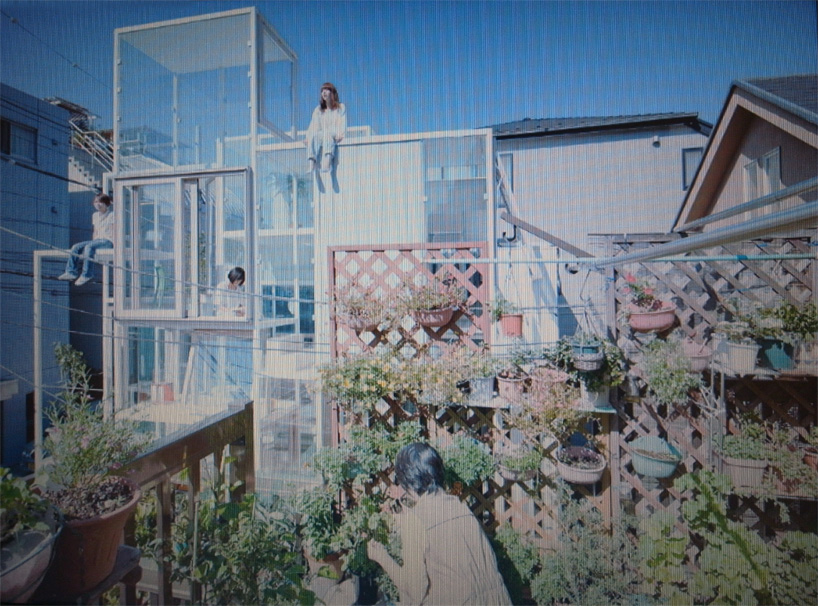
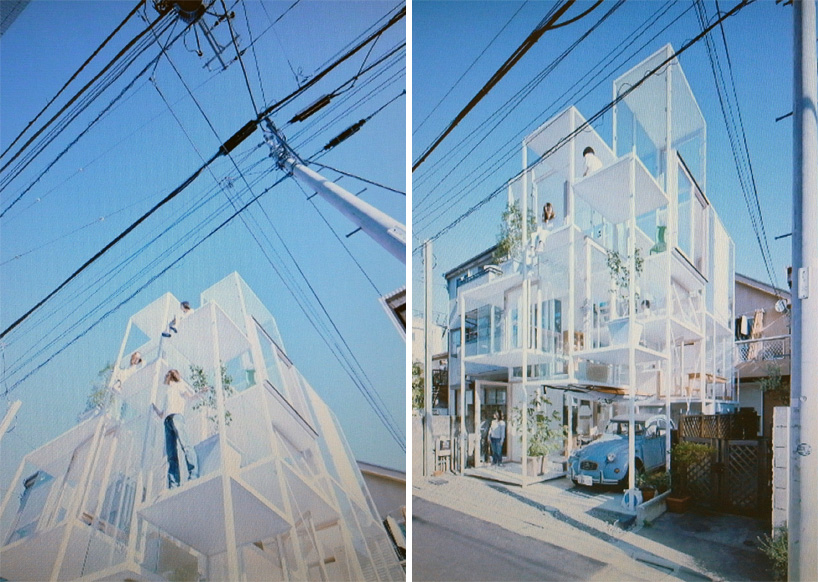
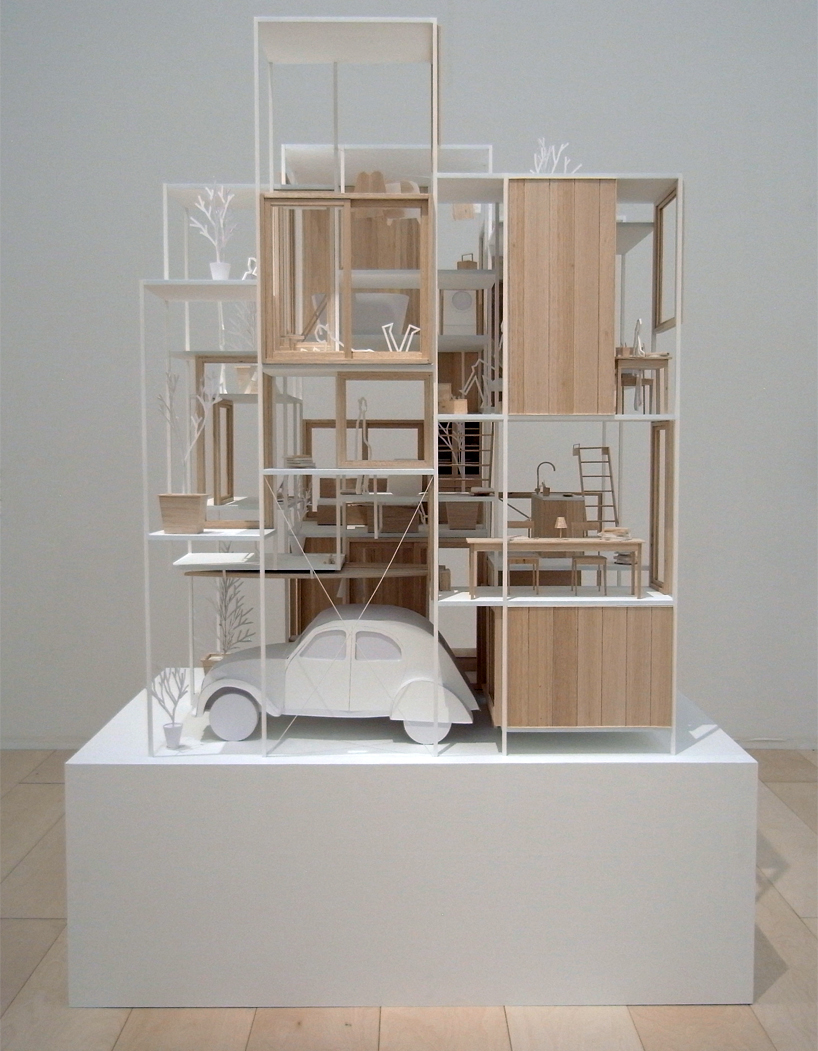
tokyo-based practice sou fujimoto architects has completed 'house NA', a single family dwelling within a
residential district in tokyo, japan. similar in form to a stacked pile of boxes the internal areas generated by
the exterior appearance are set at different elevations. the small rooms within each platform are connected
by ladder stairs allowing a free movement through the home's loosely defined program.

the rectangular windows of varied proportions and sizes frame views of adjacent structures while the elimination
of solid interior walls encourage unobstructed sight lines to higher and lower spaces. at night, curtains become
temporary partitions for privacy and separation.


video still courtesy of sou fujimoto architects


video still courtesy of sou fujimoto architects


video stills courtesy of sou fujimoto architects


video still courtesy of sou fujimoto architects

a 1-5 model of the project is currently on display at MOT - museum of contemporary art tokyo in tokyo, japan,
as part of the exhibition 'architectural environments for tomorrow - new spatial practices in architecture and art'.
curated by yuko hasegawa (MOT tokyo chief curator) together with SANAA architects (kazuyo sejima + ryue nishizawa),
the exhibition features works of 23 architects and artists from 12 countries (tentative) that introduce their experiments
and achievements through models, drawings, images, sculpture, photographs and mixed-media installations.


model at the museum of contemporary art tokyo, japan
image © designboom

18 August 2011

Zaha Hadid – London Aquatics Centre


The new London Aquatics Centre by Zaha Hadid was recently completed and looks amazing. The facility will host the swimming, diving, synchronized swimming and water polo events for the London 2012 summer olympics. It’s a pretty incredible looking building. You can see more pictures over at Designboom.


15 June 2011

JVA + Mole Architects - Dune House


A beautiful house half-submerged in a sand dune with a wood-sided upper level that floats above an open ground floor. Nice work by JVA and Mole Architects.


via designboom

Popular Posts